
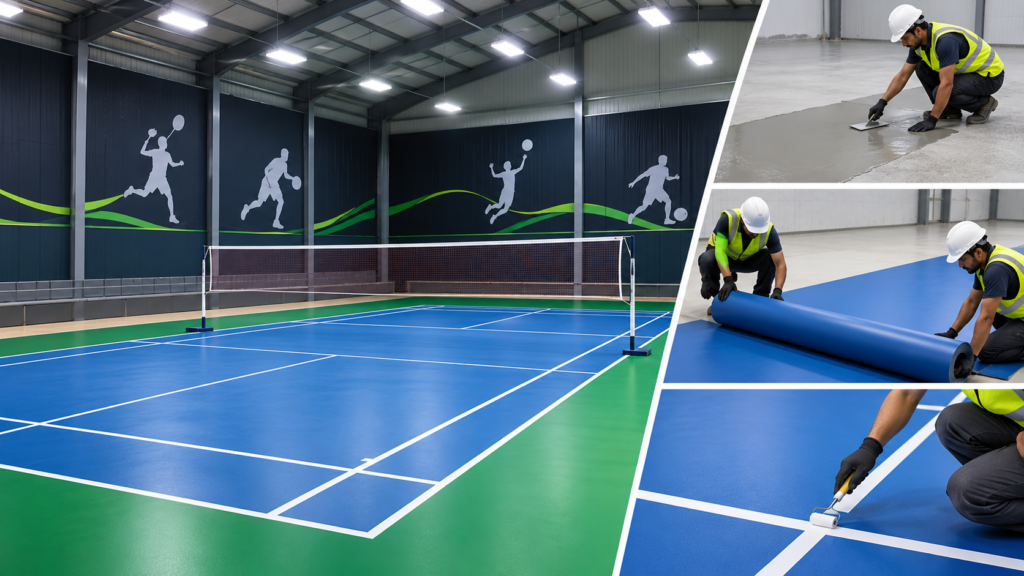
A good quality sports floor is absolutely vital in the creation of a safe, comfortable and performance oriented indoor sports facility. Whether you’re talking about a basketball court, badminton court, volleyball court or a multi-use sports hall the right floor is essential for providing the correct level of grip, stability and shock absorption. The choice of material is of course only one element of the equation. The actual installation of the sports floor is just as important in terms of producing a durable and consistent playing surface.
Understanding the installation process is key for sports facility owners, schools, academies and fitness centres who are looking to make a proper informed decision. From the initial inspection of the existing surface through to the application of the final court markings, each stage of the process is important in terms of the end quality of the court.
What Is Sports Floor Installation?
Sports floor installation is the process of preparing a surface and then fitting the specialist flooring materials that are designed for sporting activity. It’s not your run of the mill flooring as such, it’s designed to provide the requisite level of support for movement, impact, grip and player comfort.
Indoor sports facilities will require a floor that is appropriate for the sport in question. A badminton court will need a floor that allows for the type of footwork that is required, a basketball court will need a floor that has the correct level of shock absorption and ball response. The professional sports floor installation will take all of these requirements into account when selecting and installing the floor.
Different Types of Sports Flooring
Choosing the right material is a critical element in the creation of a functional indoor sports facility. There are a number of different sports flooring solutions on the market each with their own particular performance characteristics.
1. Wooden Sports Flooring
The main application of wood sports flooring is professional basketball courts, indoor stadiums and multi-purpose sports halls. When installed as an appropriate sports flooring system it offers a natural playing surface with good shock absorption and ball response.
2. Synthetic Sports Flooring
Synthetic flooring is an excellent choice for indoor sports facilities. They are low maintenance and versatile It is available in a variety of finishes and performance specifications for sports including badminton, basketball and volleyball.
3. PVC Sports Flooring
PVC sports flooring offers a flexible and practical surface for multipurpose indoor courts. It is available in different thicknesses and surface textures, allowing facilities to select options based on their sporting requirements.
4. Rubber Sports Flooring
Rubber flooring is generally used in gyms, fitness centres, and selected training areas. It offers impact resistance, durability, and cushioning, making it suitable for spaces where equipment and repetitive physical activities are common.
The best indoor sports flooring depends on the type of sport, expected foot traffic, facility requirements, and maintenance considerations.
Step-by-Step Sports Floor Installation Process
A properly planned installation process helps create a reliable playing surface. Here are the major steps involved in sports floor installation.
Step 1: Site Inspection and Floor Assessment
The first step is inspecting the installation area. Professionals assess the available space, floor dimensions, existing surface condition, and environmental factors.
This assessment helps identify cracks, uneven sections, damaged areas, and other issues that may affect the final flooring system. The requirements of the intended sport are also considered before finalising the installation plan.
Step 2: Surface Preparation
Surface preparation is essential for achieving a stable flooring foundation. The existing floor is cleaned to remove dust, dirt, grease, and loose materials.
Any cracks, holes, or uneven sections are repaired using suitable materials. A properly prepared surface helps improve flooring adhesion and reduces the chances of installation-related problems.
Step 3: Moisture and Level Checking
Before installing the flooring, the subfloor must be checked for moisture and level variations. Excess moisture can affect adhesives, flooring materials, and long-term performance.
Professionals use appropriate testing methods to evaluate moisture conditions and check whether the surface meets the flooring manufacturer’s requirements. Necessary corrections should be completed before moving to the next stage.
Step 4: Selecting the Right Flooring Material
The next step is choosing the most suitable flooring material. The decision depends on the sport, expected usage, budget, performance requirements, and available maintenance facilities.
For example, wooden sports flooring may be suitable for certain basketball facilities, while synthetic or PVC flooring can be considered for selected indoor badminton and multipurpose courts.
Choosing the right material ensures that the installed surface meets the functional requirements of the facility.
Step 5: Base Layer and Subfloor Preparation
Depending on the selected flooring system, an appropriate base layer or underlay may be required. This layer helps create a suitable foundation and can contribute to shock absorption, stability, and overall floor performance.
The subfloor preparation process must follow the technical specifications provided by the flooring manufacturer. Incorrect base preparation can affect the durability and performance of the finished surface.
Step 6: Flooring Installation
Once the base is ready, the selected flooring material is installed. The installation method depends on the flooring type and may involve adhesive application, interlocking systems, or specialised fitting techniques.
During this stage, professionals ensure proper alignment, secure connections, and consistent surface finishing. Manufacturer-recommended installation procedures should be followed to achieve the expected results.
Step 7: Court Marking and Finishing
After installing the flooring, court markings are applied according to the dimensions and requirements of the respective sport.
Accurate markings are important for maintaining proper playing boundaries and ensuring usability. Edge finishing, joints, corners, and transitions are also inspected to achieve a clean and professional appearance.
Step 8: Final Inspection and Quality Testing
The final stage involves checking the completed flooring system. Professionals inspect surface consistency, grip, joints, finishing, and other relevant performance characteristics.
Depending on the flooring system, appropriate checks may also be conducted for shock absorption, ball response, and surface friction. Any identified defects should be corrected before the facility is opened for regular use.
Benefits of Professional Sports Flooring Installation
Investing in professional sports flooring installation offers several advantages for indoor sports facilities.
- Improved Player Safety: Suitable flooring helps provide appropriate grip and cushioning, reducing the risk of slips and excessive impact.
- Better Playing Experience: A consistent surface supports comfortable movement and sport-specific performance.
- Long-Term Durability: Proper material selection and installation can help extend the flooring system’s service life.
- Consistent Surface Quality: Professional installation helps minimise uneven sections, loose joints, and finishing problems.
- Easier Maintenance: Flooring systems selected according to facility requirements can be easier to clean and maintain.
These benefits make proper installation an important consideration for schools, sports academies, gyms, and indoor stadiums.
How to Choose the Right Sports Flooring Contractor
Selecting an experienced sports floor contractor is important for achieving reliable installation results. Before finalising a contractor, consider the following factors:
- Previous Projects: Review completed sports flooring installations to understand the contractor’s experience.
- Material Knowledge: Check whether they understand different flooring materials and their sporting applications.
- Installation Expertise: Ask about their surface preparation, installation methods, and quality-checking procedures.
- Project Timeline: Discuss the expected completion time and installation schedule.
- After-Installation Support: Understand the available maintenance guidance, warranty conditions, and repair support.
A contractor with relevant technical knowledge can help you select an appropriate flooring system and plan the installation according to your facility’s requirements.
Sports Floor Maintenance Tips
Regular maintenance helps preserve the appearance and performance of an indoor sports floor.
- Clean the surface regularly using manufacturer-recommended cleaning products.
- Remove dust and debris to maintain suitable playing conditions.
- Avoid dragging heavy equipment across the flooring.
- Inspect joints, edges, and surface areas for signs of damage.
- Address scratches, loose sections, and other defects promptly.
- Follow the manufacturer’s maintenance guidelines for periodic cleaning and care.
A consistent maintenance routine can help protect your investment and keep the sports facility ready for regular activities.
Conclusion
A successful sports floor installation requires proper planning, suitable material selection, careful surface preparation, and professional execution. Every stage contributes to the safety, durability, and performance of the finished surface. By choosing the right flooring system and an experienced installation team, sports facilities can create a dependable environment for athletes, students, and fitness enthusiasts.
Frequently Asked Questions (FAQs)
1. What is the process of sports floor installation?
The process generally includes site inspection, surface preparation, moisture testing, material selection, base preparation, flooring installation, court marking, and final quality inspection.
2. Which flooring material is best for indoor sports courts?
The best material depends on the sport and facility requirements. Wooden, synthetic, PVC, and rubber flooring are commonly considered for different indoor sports and training applications.
3. How long does sports flooring installation take?
The installation timeline depends on the court size, flooring material, subfloor condition, and project complexity. A contractor can provide a more accurate schedule after inspecting the site.
4. What factors affect the cost of sports flooring installation?
The cost depends on flooring material, installation area, subfloor preparation, labour, accessories, court markings, and additional technical requirements.
5. How can I maintain an indoor sports floor?
Regular cleaning, timely repairs, suitable cleaning products, and periodic inspections help maintain indoor sports flooring and support its long-term performance.