
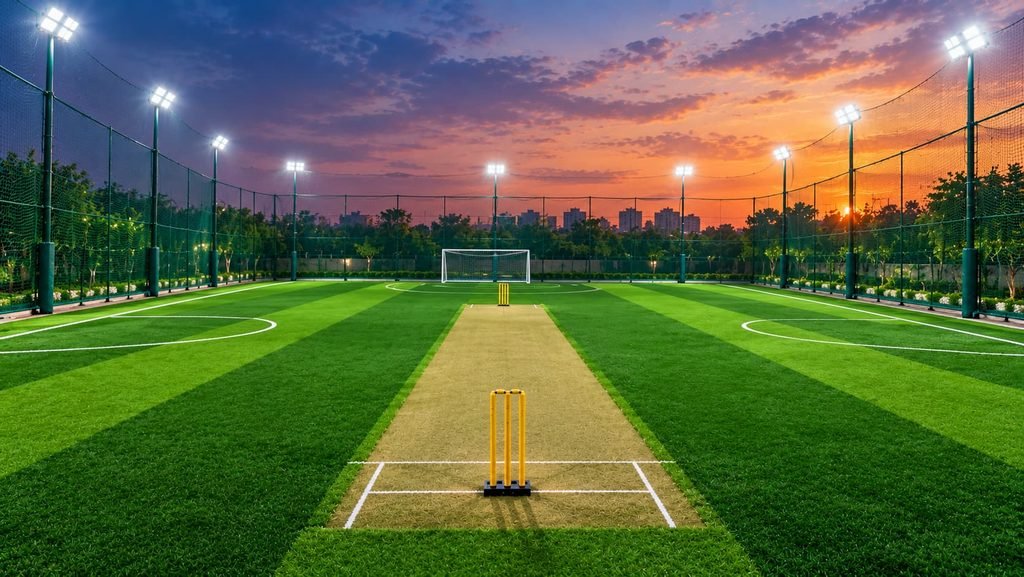
Building the turf is the easy part, honestly. The real test starts the day it opens – getting players to show up, getting them to come back, and turning the whole thing into something that actually pays for itself.
Doesn’t matter if you’ve built a cricket turf, a football turf, or one that does both – good grass alone won’t fill your slots. It takes visibility, an easy booking process, sensible pricing, a decent experience once people are there, a few good partnerships, and consistent promotion. Here’s how that actually plays out in practice.
1. Make sure people can even find you
Most players start with Google – “cricket turf near me,” “football turf booking,” whatever. If your Google Business Profile is half-filled-out or wrong, you’ve basically made yourself invisible to the exact people searching for you.
Get the basics right: correct name and location, a phone number that works, accurate hours, real photos of your actual turf (not stock images that could be anywhere), clear info on how to book, a few regular posts, and genuine reviews from real customers. And keep everything consistent – website, Google profile, social media – so nothing looks off when someone cross-checks.
2. Don’t make booking a core
Nobody wants to call three times just to find out if 7pm is free. Give people more than one way in – WhatsApp, a phone call, a form on your site, an online booking platform, even DMs. And show your open slots clearly. In this business, whoever replies first usually wins the booking – by the time you call back, the customer’s already messaged the turf down the road.
3. Let WhatsApp do most of the work
WhatsApp genuinely works well for this kind of business. A simple format goes a long way:
Sport: Cricket / Football
Date:
Preferred time:
Number of players:
Duration:
Set up quick replies too, for the stuff you get asked twenty times a day – pricing, timings, location, whether Sunday evening is free.
4. Stop charging the same rate all day
Morning, afternoon, evening, weekend, late night – nobody’s willingness to pay is the same across all of these, so why should your turf pricing be? What exact numbers make sense depends on your city, your costs, and what the turf next door is charging. The point isn’t to undercharge everyone – it’s to fill more of your quiet hours without giving away your peak slots.
5. Build something for your regulars
One-off bookings are nice, but they’re not what makes your revenue predictable – repeat customers are. Think weekly slots, monthly group packages, academy deals, corporate packages, team memberships. If a group’s been booking every Saturday for a month anyway, just offer them a monthly package. Less hassle for them, steadier income for you.
6. Run tournaments
Tournaments bring energy, and more importantly, new faces – weekend cricket tournaments, box cricket events, football leagues, corporate matches, school and college competitions. Push it everywhere: Instagram, WhatsApp groups, your Google profile, local sports circles. A well-run tournament usually leaves you with a batch of new regulars.
7. Get schools, colleges, and academies on your side
These relationships pay off far more over time than random walk-ins. Reach out to schools, colleges, cricket and football academies, coaching centres, corporate offices, local sports clubs. One good partnership can mean recurring, predictable usage instead of hoping enough people book by the hour.
8. Show the real place on Instagram
People want to see what they’re actually paying for before they book it. Post real footage – the turf itself, the floodlights, fencing, netting, seating, parking, changing rooms, highlights from an actual evening match. Skip the stock photos. Real footage, even shaky phone footage, builds more trust than a polished stock image ever will.
9. Ask for reviews, and mean it
After a good session, just ask – politely. Point people toward the things worth mentioning: turf quality, lighting, how smooth the booking was, cleanliness, how the staff treated them. Don’t fake it and don’t push people toward misleading claims. Honest feedback helps you and it helps the next person deciding whether to book.
10. Don’t let the experience slide once they’re in the door
Good marketing gets someone there once. Whether they come back depends entirely on what happens while they’re on your turf. Keep an eye on the condition of the artificial turf surface, the lighting, how clean things are, safe fencing and netting, drinking water, washrooms, parking, easy entry, and staff who are actually helpful. Surface quality and lighting especially – players notice the second something’s off.
11. Not everyone wants the same thing
A single facility ends up serving very different kinds of customers, so it helps not to market to “everyone” the same way. For cricket turf: friend groups, academies, corporate teams, schools, colleges, tournament organisers. For football turf: local teams, friend groups, academies, schools, corporate groups, tournament organisers. Tailoring offers to each group tends to beat one generic promotion for all of them.
12. Answer what people are already googling
Your website and social pages can sell quietly just by answering real questions – how much does cricket turf booking cost, what’s the best time to play football, how many players fit on a football turf, how do you actually book one. This kind of content builds local visibility and answers half their questions before they’ve even picked up the phone.
13. Actually track where your bookings come from
Total bookings on their own don’t tell you much. Track the source – calls and enquiries from Google, booking messages on WhatsApp, DMs from Instagram, forms and calls from your website, new customers from referrals, new teams from tournaments, recurring bookings from partnerships. Give it a few months and patterns show up – and suddenly you know exactly where to put your energy.
14. Don’t forget the people who already booked
Getting someone once is fine. Getting the same group back every week is where the real value sits. Follow up with next week’s availability, a monthly package offer, a tournament announcement, or news about a facility upgrade – just don’t overdo it. Nobody wants a promo message from you every single day.
15. If you’re still planning, think about bookings now
Location, dimensions, surface quality, drainage, fencing, floodlighting, parking, player facilities – all of this decides who ends up walking through your gate later. If you’re at this stage, it’s worth reading through our guide on artificial turf installation before construction begins, not after.
16. Run a simple 30-day cycle
Instead of promoting randomly, break the month up:
Week 1 – Visibility: update your Google profile, add fresh photos, ask happy customers for reviews.
Week 2 – Social media: post match clips, show off the facility, share open slots.
Week 3 – Partnerships: reach out to schools, academies, local companies.
Week 4 – Events & retention: push a tournament, offer packages, follow up with past customers, and see what actually worked this month.
Repeat it, and adjust based on what the numbers actually tell you.
Cricket turf vs football turf – the approaches aren’t identical
A lot of this overlaps, but the two audiences don’t behave the same way. Cricket turf bookings tend to grow through academy tie-ups, regular team slots, box cricket tournaments, and corporate cricket events – if you’re looking for a reliable cricket turf maker in Delhi, the same fundamentals apply. Football turf responds well to local football groups, academy partnerships, weekend leagues, and corporate matches. If your ground handles both, running separate content and offers for each usually works better than treating them the same.
The construction still matters more than any of this
No amount of marketing fixes a badly built ground. Drainage, fencing, lighting, dimensions, surface quality – all of it decides whether someone actually enjoys their session enough to come back. If you’re still in the planning stage, working with an experienced sports infrastructure team from day one makes everything on this list a lot easier to pull off. If you’re based around Noida, our team at the football turf supplier in Noida page handles this end-to-end.
A.S Sports and Infra builds cricket and football turf facilities across India – ground preparation, turf installation, fencing, lighting, and everything that goes with it.
The short version
Growing your bookings comes down to visibility, easy booking, smart promotion, the right partnerships, and making sure people enjoy themselves once they’re actually there. The turfs that do well are usually the ones that thought all this through before pouring the concrete – not after.
FAQs
How can I increase cricket turf bookings? Improve local visibility, make booking simple via WhatsApp or online channels, offer packages, run tournaments, build partnerships, and keep the experience consistent.
How can I increase football turf bookings? Focus on your Google Business Profile, local SEO, social presence, academy and school partnerships, tournaments, and repeat-booking packages.
Is a Google Business Profile actually useful for a turf business? Yes – a well-maintained profile is how local players find you when they search for turfs nearby.
Should cricket and football turf have separate marketing strategies? They can share the same channels, but tailoring offers and content to each sport tends to work better.
What should I consider before building a cricket or football turf? Location, land size, dimensions, drainage, fencing, netting, lighting, safety, parking, and who you’re actually building it for.
Can A.S Sports and Infra build a cricket or football turf? Yes – we handle complete construction and installation, planned around your specific project.